
What is an Access Control System
What is an Access Control System
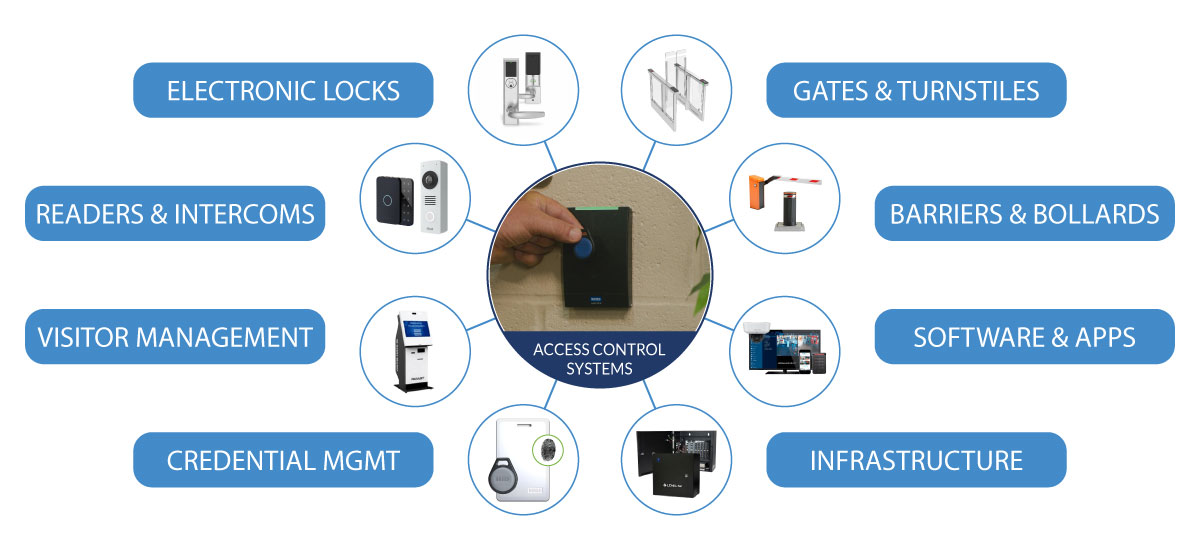
Access control systems are security frameworks designed to regulate who can enter or use specific resources in both physical and digital environments. By replacing traditional mechanical keys with electronic credentials, these systems provide enhanced security, real-time monitoring, and detailed audit trails
Core Components
Every automated access control system typically includes five essential elements at each portal:
- Credentials: The digital "key" used for identification, such as a key card, fob, PIN code, smartphone app, or biometric scan (fingerprint/face).
- Reader: An electronic device installed at entry points that scans the credential and transmits the data to a controller.
- Control Panel (Controller): The "brains" of the system that maintains a database of authorized users and makes access decisions.
- Locking Mechanism: Physical hardware like magnetic locks (maglocks) or electric strikes that release when receiving a signal from the controller.
- Software Interface: A management platform (on-premise or cloud-based) used by administrators to add users, set schedules, and view reports.
Types of Access Control Models
Organizations choose different models based on their required level of restriction and flexibility:
- Role-Based (RBAC): Assigns permissions based on job titles or departments, ensuring employees only access areas necessary for their work.
- Discretionary (DAC): Allows the owner of a specific resource to determine who has access, often used for shared files or digital assets.
- Mandatory (MAC): The most restrictive model, where a central authority manages access via strict security clearances (common in military/government).
- Attribute-Based (ABAC): A granular approach that considers multiple factors such as user role, time of day, and location.
Key Benefits
- Enhanced Security: Immediately revoke lost or stolen credentials without re-keying physical locks.
- Operational Efficiency: Automates entry for employees and can integrate with lighting or HVAC systems to save energy.
- Compliance: Helps meet regulatory requirements like HIPAA (healthcare), PCI DSS (finance), and GDPR (data privacy).
- Visibility: Real-time logging shows exactly who entered which door and when, providing a clear audit trail for investigations.
Give us a call to help you navigate Card Access Control System options to find the perfect solution for your business or application