
Home Speaker Types
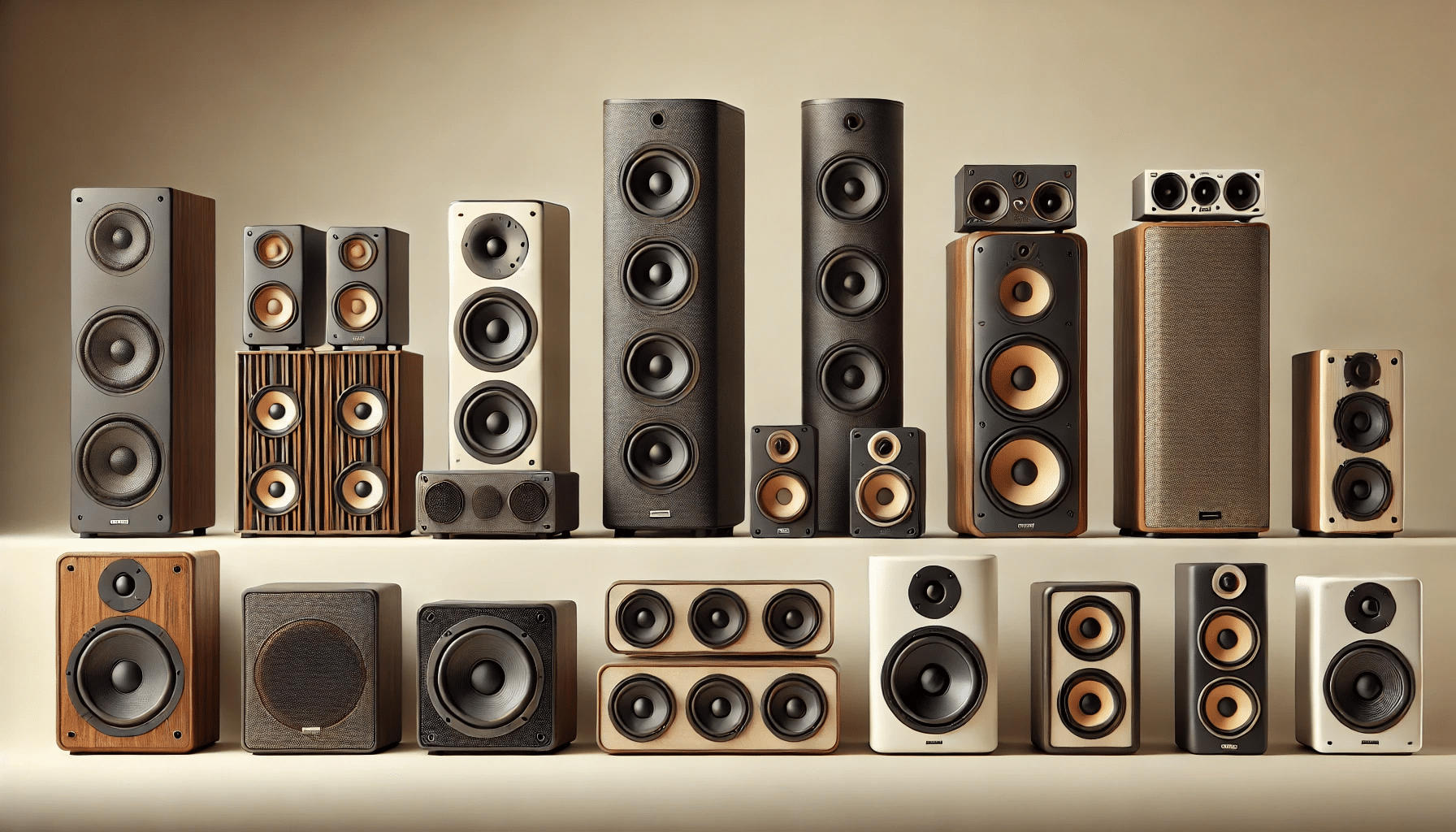
Floor-standing (Tower) Speakers: These tall units sit directly on the floor and typically stand 3–4 feet high. Towers deliver full-range sound with an excellent bass response. While they’re great for home theater, they also perform well in two-channel music systems.
Bookshelf Speakers: Compact units designed for stands or shelves. They are ideal for smaller rooms and are praised for high-quality midrange detail and imaging, and are often used in two-channel music systems. You can also use them as the surround speakers in a home theater system, or even as the front speakers in a home theater system in a small or medium-sized room.
Soundbars: Sound bars are an easy way to add better sound to your TV. These slim speakers go underneath your TV, or they can be wall-mounted without taking up any space. Sound bars help make dialogue clearer and more intelligible. Many soundbars have the option for a wireless powered subwoofer to add bass to your TV sound system. Most models have Bluetooth and/or Wi-Fi to make streaming your music a breeze. There are even some models that have upward-firing Atmos speakers for a true surround sound experience.
Subwoofers: Specialized speakers dedicated solely to low-frequency sounds (bass). They add "rumble" and depth to movies and music that standard speakers cannot reproduce.
Ceiling and In-Wall Speakers: Designed to be flush-mounted to save floor or shelf space. They are often used in custom integration (CI) projects to provide ambient whole-home audio or surround sound without visible equipment.
Outdoor Speakers: Built with durable, all-weather materials to withstand rain, UV rays, and extreme temperatures.